AI Creative Strategist in the Philippines: What the Job Is (And Why It’s a Person, Not a Tool)
An AI creative strategist decides what ad to make, then uses AI to make it faster. I do this from the Philippines for ecom and DTC brands worldwide.
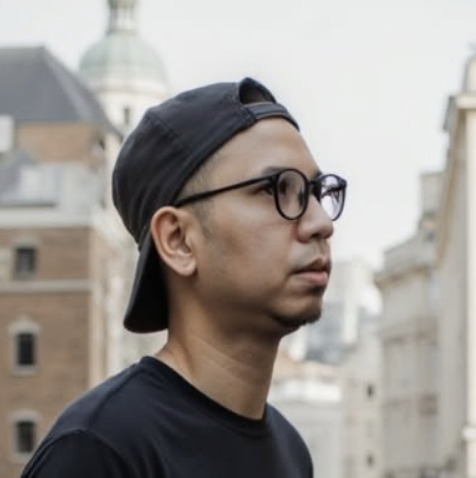
By Joel ‘Pex’ Reyes, AI Creative Strategist based in the Philippines
Never confuse an AI creative strategist with an AI creative strategy tool.
Search the term today and most of what you find is software. Segwise’s feature page, a vendor page, opens with “Your always-on AI creative strategist.” The product is useful. Vendors borrow the job title for software that reports performance and suggests next moves.
This page is about the person behind those decisions.
Quick answer: An AI creative strategist is the person who decides which ad a brand should make next (the angle, the hook, the format and the offer), then uses AI tools to research, script and produce it faster than a traditional team. The strategist owns those decisions and answers for them.
I’m Joel ‘Pex’ Reyes, and I work from the Philippines. I’ve edited video for 15 years and freelanced since 2018. Now I make AI video and UGC ads for ecom and DTC brands around the world. Some people call this job AI creative specialist or AI creative expert. I call it strategist, and this page explains why.
Brand owners ask why they should hire a person if the software can already write a brief. The job itself comes first.
1. What is an AI creative strategist?
An AI creative strategist is a person who owns the creative decisions behind paid social ads: which angle to run, which hook opens it, which format carries it, and what to test next. AI tools speed up the research and the production. The strategist owns the outcome and answers for it.
AI ads usually fail at the decision, not the prompt, the model, or the credits. A wrong angle still loses, even with a sharp render.
Vendors use the same words for their products. Segwise describes its Creative Strategy Agent as something you ask about your creatives, your performance and your competitors’ ads. That’s good input. A dashboard that tells you which hooks won last month still can’t sit with a brand owner and decide which bet to make next month with a fixed budget.
I use a simple test. Treat anything you can install as a tool, and hire a strategist when you need someone who answers for a bad call.
2. AI creative strategist vs AI creative specialist vs AI creative expert
These three titles get used interchangeably, and they cover different work. A strategist decides what to make and why. A specialist executes the production with AI tools. An expert is a broader credibility label that can cover either one. I do all three, but strategist is the word for the part clients actually pay for.
| Title | What they own | The question they answer |
|---|---|---|
| AI creative strategist | The decision: angle, hook, format, offer, and what to test next | What should we make, and why? |
| AI creative specialist | The production: generating, editing and finishing assets with AI tools | How do we make it well, and fast? |
| AI creative expert | No fixed scope. A credibility label for someone deep in the field | Who knows this space? |
Real job posts back this up. WITHIN’s AI Creative Specialist posting calls the role “a hands-on expert in generative image and video production.” VML’s AI Art Director / Creative Specialist listing asks for someone who doesn’t rely on “lucky prompts.” Both are skilled production roles. The person picking the angle sits one step earlier.
I covered the production side in more detail in my earlier post, AI Creative Specialist Skill Matrix. The strategist sits one step before that work. My post on the AI creative specialist in the Philippines covers my production steps and current tool stack.
The difference shows up in how the work gets priced. I wrote this on LinkedIn about editing rates:
“The $8k to $10k job gets priced on a different question. How much money does a bad call cost? If one wrong hook burns a month of ad budget, paying someone to get it right is the cheap option.” (Joel ‘Pex’ Reyes, LinkedIn, Oct 12, 2026)
That is why strategy work is priced on the cost of a bad call, not on how many files get delivered.
3. What an AI creative strategist does in a week
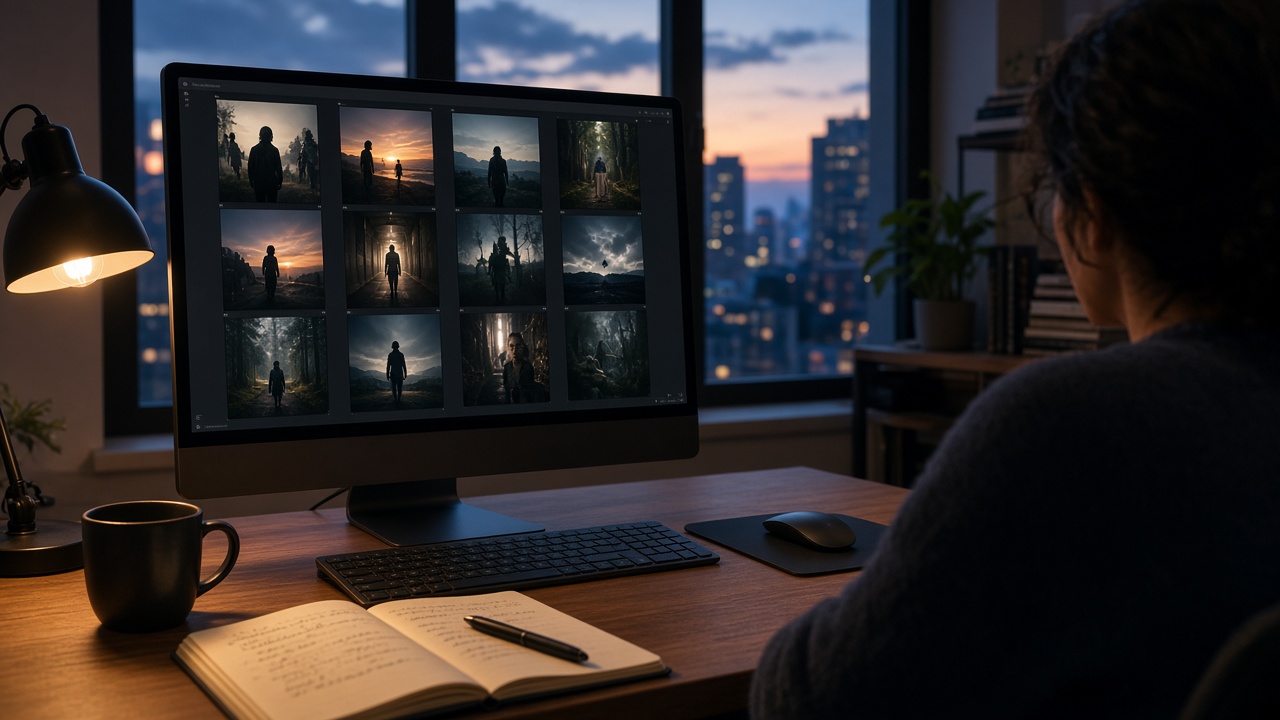
Most of the week goes to deciding. I research what customers actually say, pick the angles worth testing, write the brief and the script, then produce and edit the ads. Once they run, I read the numbers and decide what to cut, what to keep and what to try next.
This is the loop I run for a brand:
- Research. Customer language, reviews, objections, competitor ads. The angles come from here, not from the tool.
- Brief and script. One angle per ad, and one hook per variant. This is the hardest part. A strong script can carry a great edit, while a weak script still ends as a well-edited weak video.
- Production. AI images into AI video, AI avatars where they fit, voiceover, and statics. For animation-style ads I use my AI Animation Ads Machine (AAM). For UGC-style first frames I use UGC Ad Frames, a skill I built for candid, phone-style shots.
- Edit. This runs through my AI Editing Machine (AEM), which packs my editing process into a skill I use on every video.
- Read the results. Meta defines hook rate as the percentage of times a video played for at least 3 seconds. It’s a direct check on whether the opening did its job.
- Decide the next round. Keep the winner’s angle, change one thing, and run it again.
AI shows up in the middle of that list. Research and the next-round call are judgment.
4. The tools are the toolkit, not the strategist
Tools change every few months. Creative decisions keep the same shape. Right now my stack includes Claude, Codex, Gemini, Kling, Seedance, Magnific, ElevenLabs and HeyGen. Next quarter it may look different. I switch tools when a better one shows up. The result still depends on the call.
Two people can use the same AI video model and get very different ads. One looks like slop, and the other looks like a brand, because the calls were different.
Brand owners often say the software already tells them which hooks won. The software reports the past. The next ad is a bet. Someone has to weigh the brand, the offer, the budget, what the client will approve and what the audience is tired of seeing. Then someone has to live with the result. Software can inform that bet, but a person has to own it.
I’ll admit one limit. A good tool makes a strategist faster, and on a small account with one product and one offer, a sharp founder with good software might be enough for a while. The gap opens when the budget grows and every wrong call costs more.
5. Why 15 years of editing still matters with AI
AI made generating cheap, while judgment still costs time and taste. After 15 years of editing, the useful thing I bring is knowing which of ten clips is worth keeping, and how to cut it so it plays like an ad instead of a demo reel.
The obvious way to make an AI ad is one generation, maybe two, then post it. That path is also why so much of it looks the same.
The way that works is the opposite. I make ten and delete nine. I call it the 10:1 Ratio. I put it this way on LinkedIn:
“Good AI output isn’t a prompting problem. It’s a volume problem. Overgenerate, keep the best 10%, then edit the hell out of it.” (Joel ‘Pex’ Reyes, LinkedIn, Jun 24, 2026)
The catch is cost, because overgenerating burns credits. Picking the one clip in ten that’s worth keeping is an editor’s skill, and it’s what keeps that spend from being wasted.
That’s also why I built the AI Editing Machine. It’s my editing judgment, mostly from ads, packaged so the cuts, graphics and sound come out like a pro made them. The tool carries the process, and taste still has to come from the person running it.
If you want the earlier version of this thinking, I wrote about an editor’s AI workflow in Freelance AI Video Editor Philippines: Runway Workflow.
6. How to hire an AI creative strategist (checklist)
Hire for the decisions they make with the software. Ask to see real ads they made, how they found the angle, and what they changed after the first results came back. Anyone can list tools. A strategist can explain why one ad ran and the others didn’t. That explanation is what you’re paying for.
- Real ads, not demo reels. Ask which pieces in the portfolio actually ran for a brand.
- An angle process. Ask how they research before they prompt. If the answer starts with a tool, keep asking.
- Editing skill. Ask what they cut and why, since generating got easy and choosing still takes skill.
- A testing habit. Ask which number they read first and what they do when a hook misses.
- Honest AI disclosure. They should tell you what’s AI and what’s real footage, and follow each ad platform’s rules.
- Clear time-zone handling. I work from the Philippines with brands around the world, so this matters to me. Ask any remote strategist how briefs, drafts and approvals move between your hours and theirs.
- Red flags. Guaranteed ROAS, loyalty to one tool, no edit pass, and no answer for why an ad lost.
If you want one person to make the calls and the ads, here’s how to hire an AI creative strategist in the Philippines, with my process and pricing.
FAQ
Is an AI creative specialist the same as an AI creative strategist?
The roles overlap. A specialist handles production, including generating, editing and finishing assets with AI tools. A strategist chooses the angle, hook and format, then decides what to test next. I do both in my work on AI video and UGC ads.
Is an AI creative strategist a tool or a person?
A person. Some software is marketed as an “AI creative strategist,” and it can answer performance questions fast. The strategist is the human who decides what to make with those answers, and who is accountable when a call turns out wrong.
What does an AI creative strategist cost?
My projects run about $1,700 to $4,300 (₱100,000 to ₱250,000), depending on scope. Someone who picks angles and runs tests for a brand with real ad spend is priced differently from someone who only generates clips. Ask any strategist for a written quote with the scope, revision rounds and deliverables spelled out.
Do AI creative strategists replace UGC creators?
No. In my view, AI UGC-style ads fit some briefs, like fast hook tests. A real creator still wins when trust, a real face or a real product experience is the point. Deciding which one a brief needs is part of the strategist’s job.
About the author: Joel ‘Pex’ Reyes, AI Creative Strategist based in the Philippines. I’ve edited video for 15 years, freelanced since 2018, and now make AI video and UGC ads for ecom and DTC brands. More about me on the About page.